National Conference

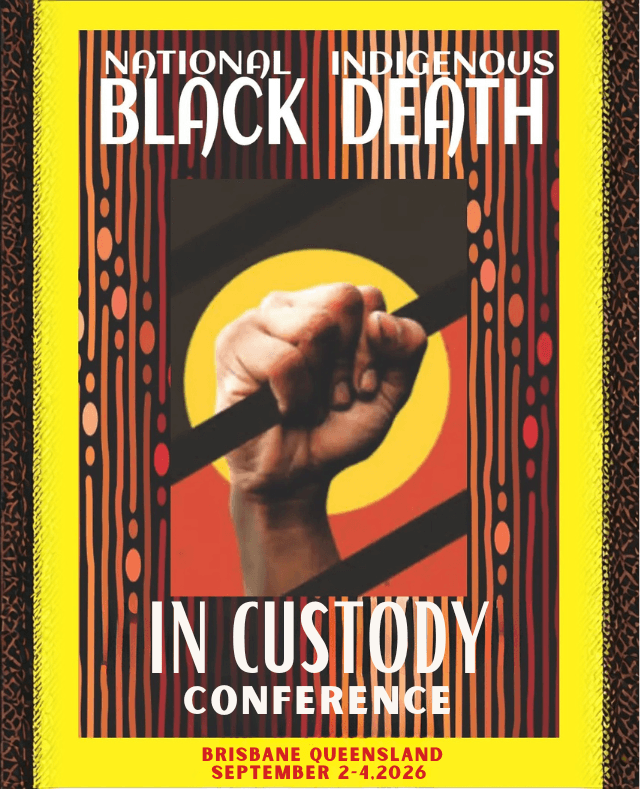
2026 National Indigenous Black Death in Custody Conference


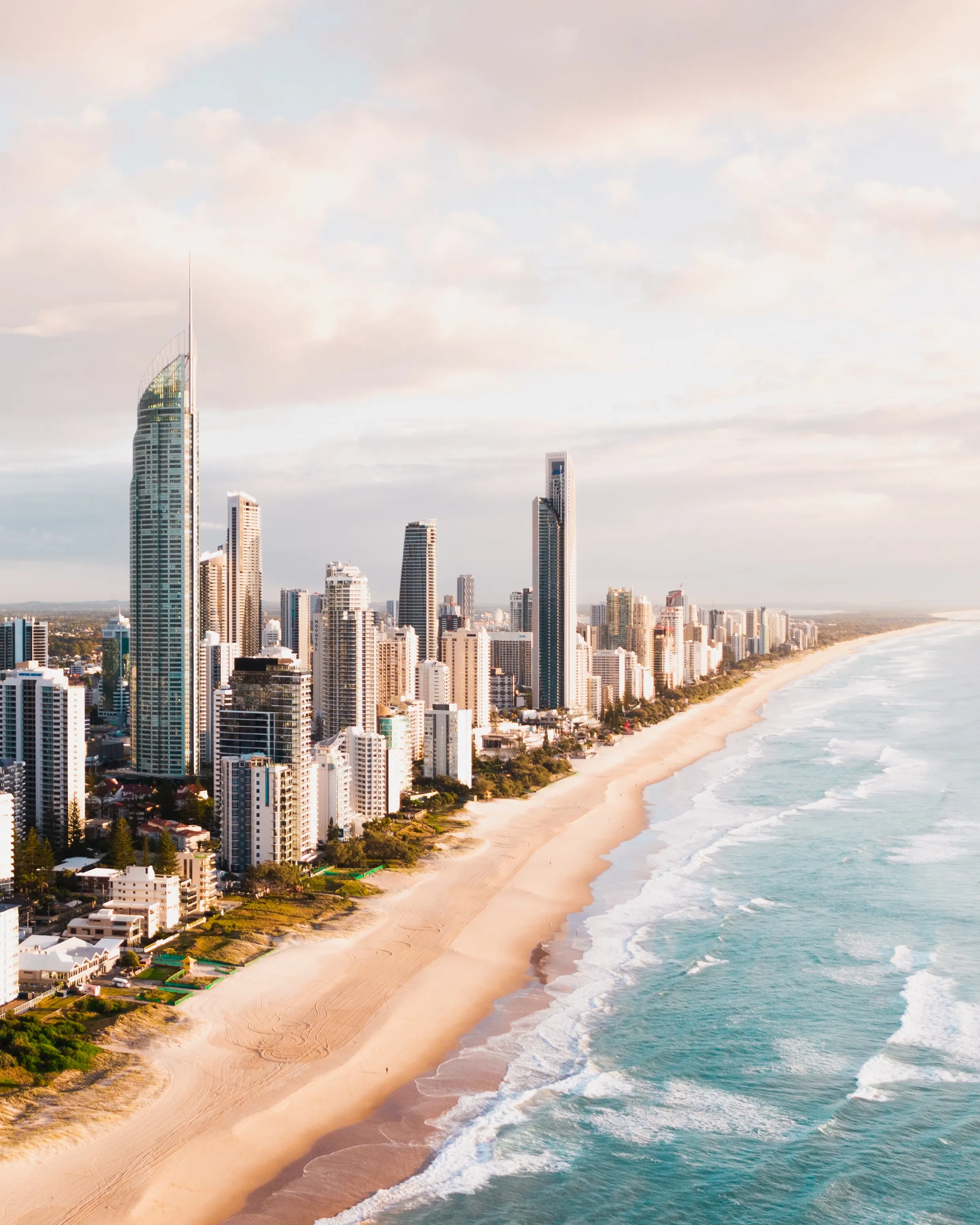
02- 04 September 2026Brisbane Queensland
View Event Details
Skip to event content
Date
Sep 2 - Sep 4, 2026
Venue
Brisbane Queensland
Call for Papers
Open
Accepting submissions

Acknowledgement to Country

In Australia, protocol requires us to recognise the Traditional Owners of the land on which we gather. All presentations must therefore begin with an acknowledgement to Country and to local Traditional Elders: "We wish to acknowledge and respect the traditional custodians whose ancestral lands we meet upon. We acknowledge the deep feelings of attachment and relationship of Aboriginal peoples to Country. We also pay respects to the cultural authority of Aboriginal peoples visiting or attending from other areas of Australia who are present here." Indigenous Conference Services acknowledges and pays respect to the Traditional people of the Country. "Welcome to Country" ceremonies and "acknowledging the traditional custodians" of the land demonstrates respect for Aboriginal people as Australia's First Peoples. Ceremonies and protocols form a fundamental part of Aboriginal cultures.

THE CONFERENCE

The 2026 National Indigenous Black Death in Custody Conference is scheduled to be held in Brisbane Queensland Australia on September 2-4, 2026. The one of Australia’s most significant gatherings dedicated to truth-telling, justice, and systemic reform. The conference honours the resilience of families whose loved ones never returned home, placing their grief and stories at the centre of national dialogue. It provides a culturally grounded space for healing, learning, and collective action, where ceremony, yarning, and evidence-based discussion guide the path forward. Families, Elders, Indigenous leaders, legal and health professionals, policymakers, and advocates will come together to face the realities of policing, corrections, coronial processes, and systemic failures that continue to take Aboriginal and Torres Strait Islander lives in custody. Through yarning circles, evidence-based dialogue, and community-led solutions, the conference amplifies Indigenous voices, honours cultural wisdom, and charts a path for urgent, meaningful change in justice, health, and custodial systems. As Australia’s leading national forum on this crisis, the conference demands accountability, challenges institutions to act with integrity, and mobilises coordinated national action. It equips families, advocates, and frontline workers with knowledge, tools, and networks to turn grief into justice, ensuring culture leads reform. Above all, it is a call to the nation: to heal, to act, and to create a future where no more Indigenous lives are lost in custody.

CONFERENCE PHILOSOPHY & AIMS

The 2026 National Indigenous Black Death in Custody Conference is guided by a philosophy that places families and communities at the heart of justice. It seeks to centre the voices and lived experiences of those directly affected, while promoting culturally grounded, community-led solutions to prevent harm and protect lives. The conference champions transparency, oversight, and institutional accountability, fostering cross-sector collaboration across policing, corrections, health, and legal systems. By creating culturally safe spaces for dialogue, truth-telling, and healing, it drives momentum toward long-overdue justice and systemic reform, ensuring that the perspectives, knowledge, and resilience of Indigenous communities shape the future of policy, practice, and advocacy.

WHO SHOULD ATTEND

The conference is open to everyone dedicated to improving disability care, inclusion, and cultural safety across Australia. It brings together First Nations people with disability, their families, carers, community leaders, Elders, and Traditional Owners who are passionate about creating meaningful change. The conference also welcomes NDIS providers, health and allied health professionals, mental health practitioners, policy makers, educators, researchers, and government representatives committed to building culturally safe and responsive systems. It is an essential gathering for community organisations, advocates, and emerging leaders seeking to strengthen partnerships, share knowledge, and drive reform within the disability sector. Whether you work in service delivery, policy, education, or advocacy, this conference offers a powerful space to connect, learn, and collaborate toward a future where every First Nations person living with disability is empowered to live strong, independent, and proud—grounded in culture, community, and belonging.

YOUR INVITATION

We wish to invite Indigenous and non-Indigenous people from Australia and throughout, to attend the conference to share and gather information. We also extend an invitation to participants to join us at the conference dinner in a relaxed atmosphere. To ensure that delegates attend and participate in the conference experience, it is important to note that to show accountability of delegates in meeting their obligation; each delegate will receive a Certificate of Attendance only when they attend 85% of all the conference sessions. In addition, at the end of the conference, delegates will receive a copy of all papers & presentations presented at the conference through Dropbox.
Why Attend

This conference offers delegates a unique opportunity to participate in a positive environment dedicated to sharing information and empowering all attendees. In our everyday working environment, the daily pressures of our roles often limit our capacity to expand knowledge and build networks. Whether working at community or governmental level, opportunities to network and establish contacts beyond your local region can be limited. This conference addresses that challenge, providing valuable connections and insights that extend well beyond your immediate professional circle.

Guest Speakers

This event features an impressive array of guest speakers who share stories, successes, and challenges they've overcome, offering inspiration and opportunities for delegates to engage with Culture, Empowerment, Education, and Networking. Drawn from diverse cultural backgrounds, professional careers, and grassroots community commitments, this year's speakers transform an ordinary event into an extraordinary one. Their contributions create lasting impact, ensuring the conference remains a source of tremendous benefit and memorable insights long after it concludes.

Our Speakers

Dr Amber Logan

Dr Amber Logan

Health Psychologist
Indigenous Development Specialists NZ

Dr. Amber R. Logan is a traditional Kahungunu Māori wahine, a New Zealand Health Psychologist and Doctoral Fellow in Public Health at Otago University. She teaches health psychology course work at the University of Auckland & Otago University and is well-known in New Zealand for her work in methamphetamine education and community activism. She is a consummate grant writer, health services evaluator and health services program designer. She has presented extensively in Australia, Canada, and the USA at Harvard University, the University of Washington, and to the US Federal Government.


Dr Joseph Stone

Dr Joseph Stone

Clinical Psychologist
Indigenous Development Specialists USA

Dr. Joseph B. Stone, PhD is an Anasaki-pikuni ceremonialist and traditionalist and member of the OKKAN (Sundance), the Last Star Thunder Medicine Pipe and Beaver Lodge. Dr. Stone works at Te Taiwhenua o Heretaunga – a Kaupapa Māori Health Provider; Awhina Whanu Family Services, and the Napier Family Centre all located in Hawkes Bay, New Zealand. He has clinical experience with adult prisoners & corrections and juvenile justice in both New Zealand and USA. He is affiliated with the National Centre on Trauma and Project Making Medicine – Indian Health Service Assessment and Treatment of Child Abuse at Oklahoma State University. He has presented to, and served as consultant to, the U.S. Senate Select Committee on Indian Affairs of Native Youth Suicide. Dr. Stone’s publications include articles on trauma, suicide, and other cultural & behavioural issues.


Aunty Bernice Hookey

Aunty Bernice Hookey

Founder and CEO
MZB Empowerment

Bernice Hookey’s family lineage traces back to the Waanyi people from the Lower Gulf of Carpentaria, Queensland. She embodies courage despite the fear that occasionally arises. As a solo mother, aunty, sister, cousin, colleague, and friend, she is deeply passionate about challenging the status quo.

An accomplished Lead Facilitator for an Indigenous National Women’s Empowerment program via Tranby, Bernice is also the Founder of MZB Empowerment. She is widely recognized as a Changemaker, Difference Maker, and Cycle Breaker, as well as a published author, mentor, and multi-award winner. Her achievements include being a finalist for national and international awards that celebrate Indigenous Excellence and Leadership.

Bernice has overcome challenges related to disempowerment, feelings of unworthiness, and well-being depreciation, navigating limited opportunities and barriers to self-expression within cultural spaces. Through experiential learning, she has lived these realities firsthand and continues to thrive.

As both a participant and now a Fellow of a globally recognized top 10 leadership program, Bernice has developed invaluable leadership skills that have strengthened her confidence. These skills, combined with her grassroots-led leadership approach, drive her mission to advance generational equity. Above all, she remains a steadfast cheerleader for families and communities, inspiring those around her with her unwavering dedication and vision.


Joedie Saunders

Joedie Saunders

Artist, Advocate, Proud Biripi Woman
Indigenous Conference Services

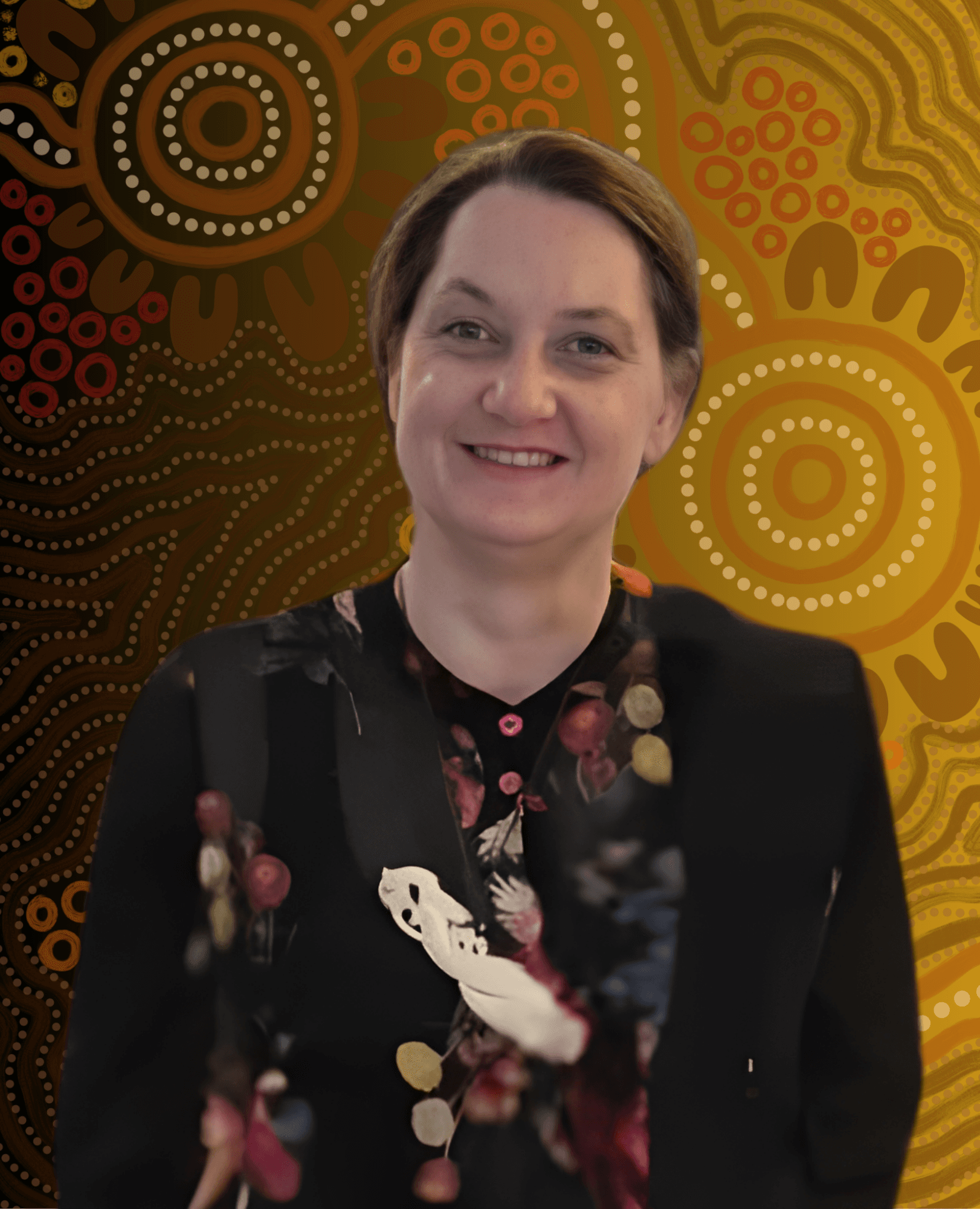
Joedie Saunders a local Biripi woman and artist, has been creating contemporary Aboriginal art for over 30 years. Her artworks deeply reflect her culture, stories of her country, and a range of emotions and feelings. Joedie is passionate about sharing her art and loves seeing the connections others make with her creations.

As a proud Biripi woman, she draw strength from her roots – a lineage of resilient mountain women, the Wimara, known for their strength and wisdom. Joedie worked tirelessly in juvenile justice and child protection, confronting the harsh realities of sexual abuse in remote communities.Transitioning into cultural heritage conservation, she spent years advocating for our land and traditions, eventually becoming the first woman CEO of the Land Council in Taree. Currently, she works as Manager of Community Engagement & Investment at the Department of Premier & Cabinet and felt privileged to continue the work of her late brother, advocating for the revival and preservation of Aboriginal languages statewide. It's a tribute to his legacy and our shared dream of cultural preservation. Joedie stated, 'In everything I do, I pay homage to my family, my community, our culture, and our land. Together, let's walk forward, honoring the past and shaping a brighter future'. Joedie is a mother of two beautiful boys.


Melissa Clarke

Melissa Clarke

Strategic Director
First Nations Advocates Against Family Violence (FNAAFV)

Melissa Clarke is a Ngarrindjeri, Kaurna and Wirangu woman and a nationally recognised Aboriginal justice leader. She is Strategic Director of First Nations Advocates Against Family Violence (FNAAFV), the national peak body representing the Family Violence Prevention and Legal Services (FVPLS) sector. FVPLS’ are Australia’s only specialist Aboriginal and Torres Strait Islander community controlled legal and frontline support services dedicated exclusively to supporting their communities impacted by domestic, family, and sexual violence.

Melissa brings more than 25 years’ experience across policing, government, and Aboriginal community-controlled organisations. She is the former Acting General Manager of the National Aboriginal and Torres Strait Islander Legal Services (NATSILS) and served for 14 years as a police officer with South Australia Police before moving into senior roles in justice policy and advocacy. Her prior roles include General Manager of Youth Justice Strategy, Policy and Reporting at the South Australian Department of Human Services, Director of Aboriginal Services at the Aboriginal Legal Rights Movement, and Children’s Advocate with the South Australian Guardian for Children and Young People. She has also contributed nationally as an Independent member of the Justice Policy Partnership.

Drawing on experience across frontline policing, government policy, and community advocacy, Melissa’s work centres on cultural authority, dignity and purpose in justice reform; preventing Aboriginal deaths in custody, strengthening justice system accountability, and securing better outcomes for Aboriginal and Torres Strait Islander peoples, particularly women, children, and families.


Nerita Waight

Nerita Waight

Chief Executive Officer
Victorian Aboriginal Legal Service (VALS)

Nerita Waight is a proud Yorta Yorta and Narrandjeri woman with Taungurung connections. She is CEO of VALS, and is an experienced solicitor with a demonstrated history of working in the legal and community services industry. Prior to becoming CEO, Nerita had experience across several teams in the organisation including family and children’s law, as well as policy and advocacy. In 2017, Nerita established Balit Ngulu, a specialist legal service for Aboriginal and Torres Strait Islander young peoples.

As CEO, Nerita has overseen the establishment of our dedicated youth legal practice Balit Ngulu and our Wirraway Police and Prison Accountability Practice which has supported clients on several high-profile Coronial Inquests, alongside the strengthening of VALS’ advocacy.

Nerita is also Deputy Chair of the National Aboriginal and Torres Strait Islander Legal Services (NATSILS), elected member of the First Peoples’ Assembly of Victoria for Metropolitan Melbourne, Treaty Negotiator and Treaty Co-Convenor. She is an independent member of the Justice Policy Partnership (established under the National Agreement on Closing the Gap) and Victorian Representative on the Joint Council. She has served on the boards of several organisations including Elizabeth Morgan House, Bubup Wilam, and the Australia Community Support Organisation.


Dr Raylene Nixon

Dr Raylene Nixon

Senior Lecturer & Researcher
Queensland University of Technology

Dr Raylene Nixon is a Gunggari woman from SW Qld, she is a Senior Lecturer and researcher whose work focuses on Indigenous deaths in custody, systemic racism, and justice reform. Informed by lived experience and community-led truth-telling, her scholarship and advocacy seek to strengthen accountability and advance culturally grounded reform following the death of her son in police custody in 2021.


Troy Williamson

Troy Williamson

.
Coroners Court of Victoria

Troy Williamson is a Yuin man and former Manager of the Coroners Court of Victoria’s Koori Engagement Unit (CKEU), recognised as the first Aboriginal family engagement coordinator to a coronial jurisdiction in Australia. In that role he led culturally safe practice for Aboriginal and Torres Strait Islander families—walking the line between law and lore so the Court could investigate with rigor while honouring sorry business, Country and community. From late 2019, Troy helped embed and operationalise Practice Direction 6 of 2020 – Indigenous Deaths in Custody, a landmark protocol released by State Coroner Judge John Cain on 22 September 2020 to strengthen how Victoria investigates Aboriginal deaths in custody. PD6 formalised culturally safe steps that the CKEU had pioneered, including: coroner attendance at the scene where practicable; contacting the Victorian Aboriginal Legal Service (VALS) within 48 hours; convening a directions hearing within 28 days; preparing a cultural brief for the investigating coroner; and conducting hearings in culturally appropriate ways (acknowledgement of Country, smoking ceremony, and the respectful use or avoidance of names/images). Troy’s leadership ensured these commitments became everyday practice for staff and coroners, not just policy on paper. In the courtroom and across investigations, Troy championed simple but powerful changes—like replacing “death” with “passing” in Court communications, organising culturally appropriate autopsy arrangements (including consideration of pathologist gender), and prioritising swift return to Country for ceremony and grief. He was often among the first to reach out to families, staying alongside them through the investigation, inquest and findings so mob had voice, respect and culturally informed support at every step.

Troy’s impact also extended to prevention and evidence. Working with the Coroners Prevention Unit, he helped drive data releases that lifted the visibility of Aboriginal passings and risk factors—such as analyses of suicides among Aboriginal people in Victoria (2018–2021) and fatal overdoses (2018–2021)—so services and communities could respond with culturally competent, life‑saving action. Community voices have publicly acknowledged Troy’s role in making coronial systems safer for mob—applauding his and the Court’s reforms while calling for sustained resourcing and Aboriginal leadership across the justice system.


Aunty Dr Roslyln Sackley

Aunty Dr Roslyln Sackley

Director
AccessAble Braille Enterprises

Dr Aunty Roslyn Sackley is a proud Ngiyampaa and Wiradjuri woman and a nationally respected educator and advocate. One of the first Aboriginal women with disability to complete a university degree, she has taught across schools, TAFE and universities, and has led decades of influential work in disability rights, cultural safety and social justice.


Sharon Kerr

Sharon Kerr

Senior Research Fellow
BlakAbility Team - University of Melbourne

Dr Sharon Kerr is a Senior Research Fellow at the University of Melbourne with more than 25 years’ experience in disability inclusion . A non‑Indigenous woman, she sees herself as a fellow camper working alongside Indigenous researchers advancing the life opportunities for those living with disability. Her PhD, from the University of Sydney was supervised by Professor John Gilroy and was titled: White Questions — Black Answers: Effective Inclusion of Indigenous Students with a Disability into Higher Education in Australia

Conference Agenda

Note

This conference agenda may change without prior notice.

8:30 AM
Registration and Networking
9:00 AM
Master of Ceremony - Welcome & Safety Announcement
9:15 AM
Welcome to Country, Moment of silence honouring lives lost & Smoking Ceremony
9:30 AM
Formal Opening Address
9:45 AM
Keynote: Born from Grief – The Power of Truth-Telling
10:30 AM – 11:00 AM
Morning Tea & Healing Space Open
11:00 AM
Keynote: Voices of the Families — Our Truth, Our Pain, Our Fight
11:45 AM
Keynote: We Carry Their Names — Frontline Family Testimonies
12:30 PM – 1:30 PM
Lunch | Yarning & Reflection Circles
1:30 PM

Breakout Sessions

Yarning Circles (Concurrent Sessions)
Circle 1: Grief, Cultural Healing & Intergenerational Trauma
Circle 2: Support Pathways for Families in Legal Processes
Circle 3: Community Resistance and Grassroots Advocacy
2:15 PM

Breakout Sessions

Yarning Circles (Concurrent Sessions)
Circle 1: Culturally-led strategies to prevent deaths in custody
Circle 2: Community-led pathways to safety, healing, and prevention
Circle 3: Policing reform frameworks
3:00 PM – 3:30 PM
Afternoon Tea | Healing Space Open
3:30 PM
Keynote: We are not here to be silenced — we are here to be heard.
4:15 PM
Sunset Vigil Group Activity - Memorial & Honour
6:30 PM
Conference Networking Dinner

Registration

Early Bird Discount Available!

Register early to save on registration fees. Pricing changes monthly!

Please note that registrations are set out in an affordable way for organisations, which changes on a monthly basis. Hence the earlier you register, the more savings for your organisation. Registration fees include all-day access to the event, available conference papers, daily lunch, and refreshments for registered delegates only. Fees do not include travel costs or accommodation.

Important Payment Terms

Registration fees must be received within 7 DAYS from being issued an invoice. Otherwise, bookings will not be considered.

Let's Connect

We'd love to hear from you. Whether you have a question about our conferences, registration, or anything else, our team is ready to answer all your questions.

Contact us ICS

Indigenous Conference Services

ICS Australia Pty Ltd

Email

admin@icsconferences.org

We typically respond within 24-48 hours

Mailing Address

8 Kiwi Court Point Vernon QLD 4655

Send us a message

Fill out the form below and we'll get back to you as soon as possible.

Maximum 5000 characters

Ready to join us?

Register Now

Become Part of ICS

Keynotes

Keynotes

Empower others with your stories, insights, and wisdom, inspiring a world where Indigenous culture is celebrated and respected.

Become a Speaker
Exhibitions

Exhibitions

Use your platform to create awareness about vital Indigenous causes and issues, inspiring attendees to become advocates for positive change.

Become an Exhibitor
Sponsorship

Sponsorship

Associate your brand with a cause that matters, gaining valuable exposure to a diverse and engaged audience, both locally and globally.

Become a Sponsor
Australian Conference by Indigenous Organizers

Join Our Conference

Subscribe to our mailing list and stay informed about the latest developments in the world of ICS conferences.