THE CONFERENCE
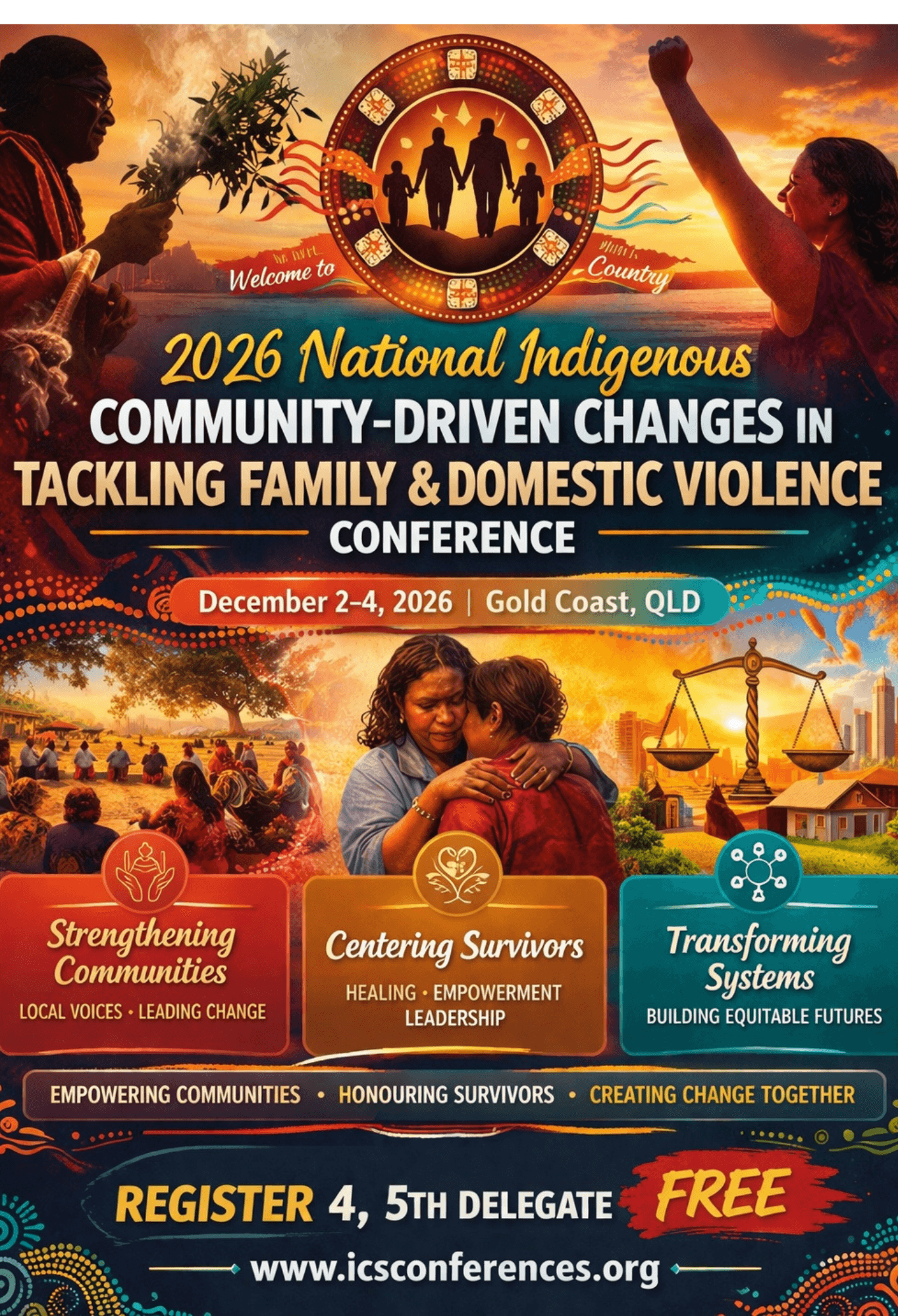
The 2026 National Indigenous Community-Driven Changes in Tackling Family and Domestic Violence Conference on December 2-4, 2026, scheduled on the Gold Coast QLD is a nationwide gathering dedicated to empowering communities to lead the transformation in preventing and responding to domestic violence. Bringing together survivors, advocates, service providers, policymakers, researchers and community leaders, the conference focuses on elevating community voices, sharing innovative grassroots strategies, and building collaborative approaches that promote safety, healing, and justice. Centered on equity, cultural responsiveness, and survivor leadership, the conference aims to inspire actionable change by highlighting how lasting solutions emerge when communities drive the movement to end domestic violence by themselves.
THE CONFERENCE THEME
Grounded in equity, healing, and collective responsibility, this year’s conference showcase the deep impacts of trauma, systemic inequality, and social injustice, while highlighting the urgent need for culturally responsive, community-led, and trauma-informed approaches. More than a conference, it is a movement for safety, empowerment, and transformative change which will focus on three interconnected themes:
1. Strengthening Communities – Local Voices Leading Change
This theme celebrates the power of communities to lead the way in preventing and responding to domestic violence. It highlights locally driven initiatives that draw on community knowledge, culture, and strengths to create safe environments where families can thrive. Through collaboration and shared leadership, this theme uplifts innovative, grassroots solutions that place the needs and wisdom of each community at the heart of change.
2. Centering Survivors – Healing, Empowerment, and Leadership
At the core of this theme is the belief that survivors’ experiences and insights must shape every aspect of domestic violence prevention and response. It focuses on survivor leadership, healing, and empowerment—honouring their resilience and amplifying their voices in policy, practice, and service design. By valuing lived experience, this theme promotes trauma-informed, compassionate, and survivor-driven pathways to safety and recovery.
3. Transforming Systems – Building Sustainable, Equitable Futures
This theme explores how systems—justice, health, housing, education, and social services—can be transformed to better support community-driven change. It calls for greater collaboration, accountability, and investment in sustainable solutions that reflect the diversity of lived experiences. By centering equity, inclusion, and cultural responsiveness, this theme envisions a future where every individual and community can live free from violence, supported by systems that empower rather than silence them.
THE CONFERENCE PHILOSOPHY AND OBJECTIVE
The 2026 National Indigenous Community-Driven Changes in Tackling Family and Domestic Violence Conference is grounded in the belief that lasting change begins within communities. Domestic and family violence is not only a personal issue but a collective responsibility that requires compassion, collaboration, and courage. This conference embraces a community-driven approach—where the voices of survivors, advocates, and local leaders are not only heard but lead the way in shaping responses, policies, and systems. Guided by principles of equity, cultural respect, inclusion, and trauma-informed practice, we believe that every community holds the knowledge and strength to create safety and healing. Our philosophy centers on partnership, empowerment, and accountability—working together to build a future where all individuals and families can live free from violence, supported by systems that are just, responsive, and rooted in community wisdom.
The overarching objective of the conference is to strengthen community-led action to end domestic and family violence by creating a national platform for learning, dialogue, and collective empowerment. Grounded in equity, healing, and inclusion, the conference seeks to bridge the gap between policy, practice, and lived experience—ensuring that prevention, response, and recovery efforts are guided by the voices of survivors, communities, and those working on the frontline.
Specifically, the conference aims to:
Provide a safe, inclusive, and trauma-informed space for open and respectful discussions about domestic and family violence, healing, and social change.
Center the leadership and lived experiences of survivors, ensuring their voices shape policy, practice, and community-based solutions.
Showcase innovative, community-driven programs that strengthen prevention, support healing, and promote safety and empowerment for individuals and families.
Equip service providers, advocates, and policymakers with tools to embed trauma-informed care, cultural responsiveness, and community engagement in all aspects of their work.
Foster collaboration and partnership across community, government, research, and service sectors to create more integrated, responsive systems of support.
Address systemic barriers and inequalities—including gender-based violence, racism, poverty, and discrimination—through advocacy, accountability, and reform.
Promote leadership development and capacity building within communities to ensure sustainable, locally led initiatives that create lasting change.
Encourage the sharing of evidence, innovation, and community wisdom to strengthen prevention, early intervention, and long-term recovery strategies.
Celebrate resilience, cultural strength, and collective action, affirming that true change begins when communities are empowered to lead their own pathways to safety and justice.